

Source smarter at every estate sale.
Walk into any estate sale on a Saturday morning and you'll notice something interesting. Some people browse. Others move with purpose. The difference isn't expertise — it's information, and how fast they can use it.
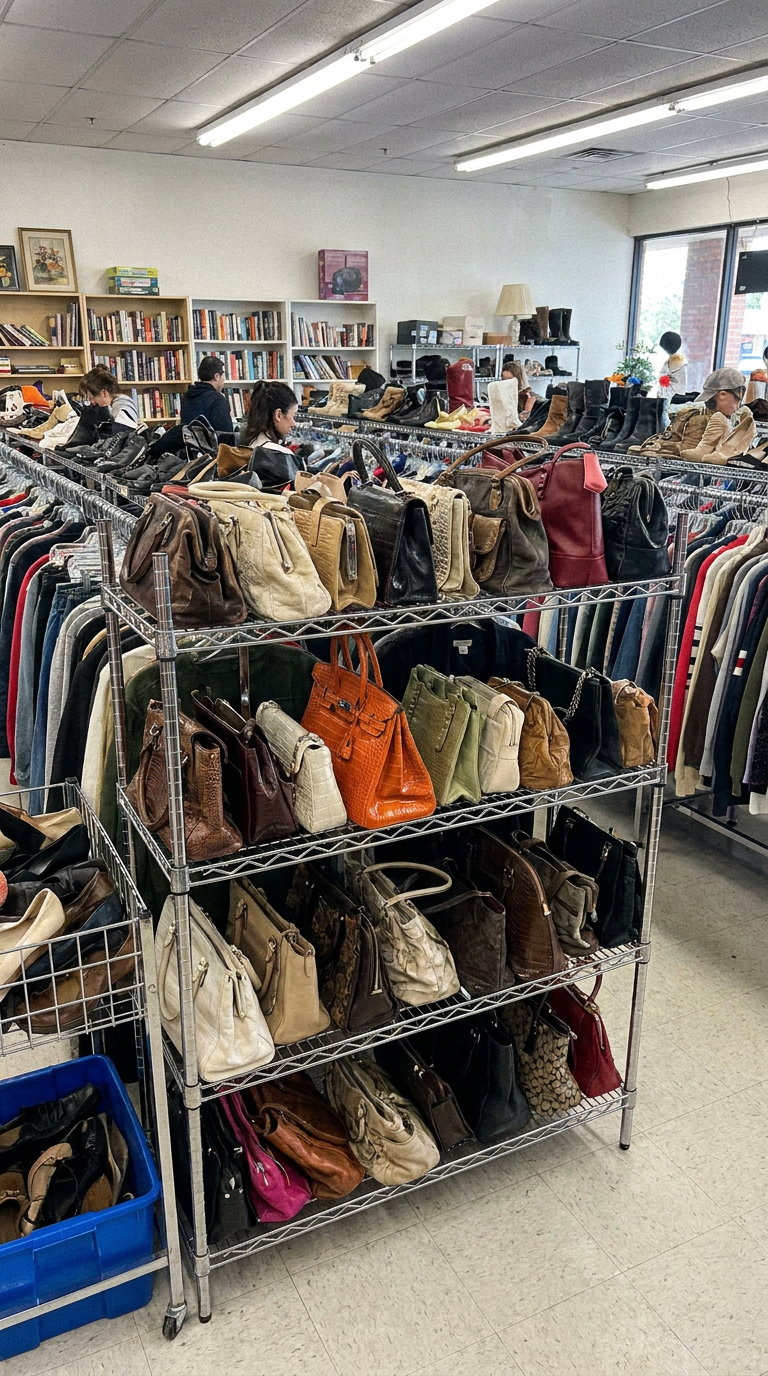
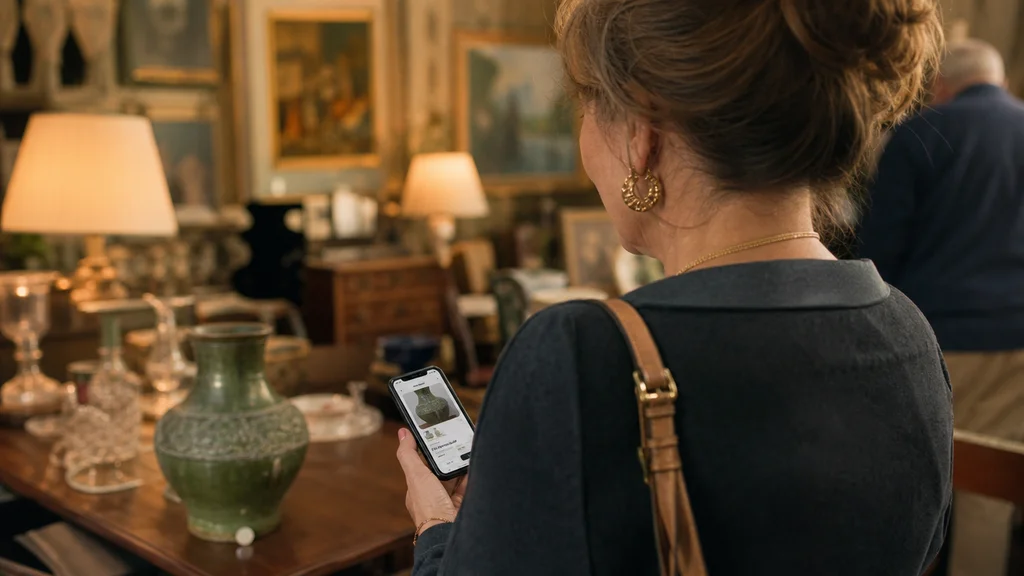
Walk into any estate sale on a Saturday morning and you'll notice something interesting. Some people slowly browse room to room, picking up items, turning them over, and putting them back down. Others move with purpose. They stop suddenly. They grab an item. They pull out their phone. A few seconds later they've either put the item back or they're carrying it to the checkout table.
To an outsider, it looks like they simply know more than everyone else. Maybe they've been doing it longer. Maybe they grew up around antiques. Maybe they're experts. The truth is usually much simpler. They have access to better information. And they know how to use it.
The most expensive mistake people make
Most people assume they can recognize value when they see it. After all, if something looks expensive, it must be worth money. Right? Not exactly.
Every week people donate valuable items to thrift stores. They sell collectibles for a fraction of their value. They throw away vintage electronics. They accept lowball offers on furniture. They price rare items as if they were ordinary. Not because they're careless — because they simply don't know what they have.
The challenge isn't finding valuable items. The challenge is identifying them. A blue-and-white vase might be worth $20. Or it might be worth $800. A chair might be worth $40. Or it might be worth $1,200. A watch might be worth $50. Or it might be worth several thousand dollars. From the outside, those items can look almost identical.
- The maker's mark matters.
- The model number matters.
- The production year matters.
- The condition matters.
- The market matters.
Why research takes so long
Say you're standing in an estate sale and find a vase that catches your eye. What happens next? You start searching. You try to identify the maker. You search Google. You browse eBay. You compare photos. You look through sold listings. You try to figure out if the signatures match. You attempt to determine whether it's old, rare, or collectible.
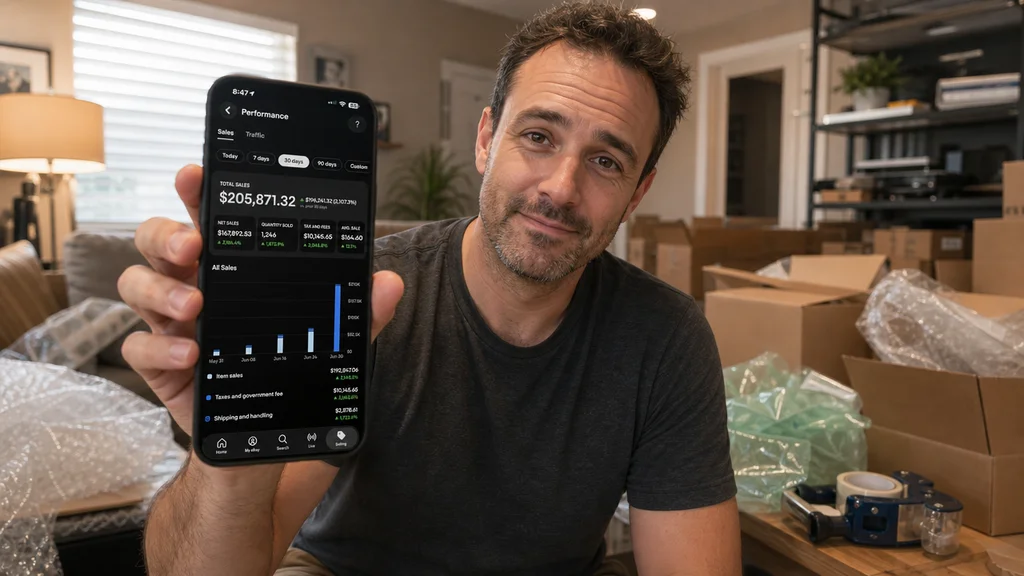
Ten minutes later you're still standing there researching. Meanwhile another buyer has already moved on to twenty other items. This is the hidden problem in sourcing. Finding opportunities isn't difficult. Finding them fast enough is. The best resellers aren't spending all day researching one item — they're evaluating dozens or hundreds of opportunities every week.
The difference between price and value
One of the biggest misconceptions in reselling is confusing asking prices with actual value. Anyone can list an item online for any amount they want. That doesn't mean someone will pay it.
"Listings don't create value. Buyers create value."
That's why experienced resellers focus on recently sold comparable items. Those sales tell the real story — what buyers are actually paying, how quickly items are selling, whether demand is increasing, whether supply is limited, and what the realistic market value is today. That's far more useful than seeing what someone hopes to get.
Understanding Fair Market Value
At Value Scout, we focus heavily on Fair Market Value. FMV is not the highest price someone could theoretically get. It's not the dream price. It's not the auction house headline. It's the realistic amount a willing buyer would pay a willing seller under current market conditions.
FMV is often the single most useful number when buying or selling. Why? Because it removes emotion from the equation. Instead of asking 'What do I think this is worth?' you ask 'What does the market think this is worth?' That's a much more powerful question.
The problem with guessing
Many people source inventory based on instinct. They see an item and think, 'That feels valuable.' Sometimes they're right. Often they're not. The problem with intuition is that it doesn't scale. You can't become an expert in every category — there are simply too many.
Furniture, art, pottery, glassware, jewelry, watches, collectibles, electronics, tools, sports memorabilia, vintage toys. The list never ends. Even professional resellers specialize. Nobody knows everything. That's why information matters more than expertise.
How Value Scout works
Value Scout was built around a simple idea: the person with the best information makes the best decisions. When you scan an item, Value Scout helps identify exactly what you're looking at. Rather than forcing users to manually search through dozens of listings, Value Scout analyzes visual characteristics, identifies potential matches, and begins researching the item automatically.
The goal isn't simply identification. The goal is understanding value. Once an item is recognized, Value Scout evaluates market activity and researches comparable sales to estimate a realistic Fair Market Value. Instead of spending fifteen minutes jumping between websites, marketplaces, forums, and auction archives, users receive actionable information in seconds.
Beyond basic identification
Knowing what an item is only solves part of the problem. The more important question is: what should I do with it? That's where deeper market intelligence becomes valuable. Imagine finding an item that appears to be worth around $300. That's useful. But imagine also knowing:
- Average selling price
- Recent sales activity
- Market demand
- Price trends
- Comparable items
- Estimated sell-through rate
Now you're making decisions with confidence. You know whether to buy. You know whether to negotiate. You know whether to pass. And perhaps most importantly, you know how to price the item once you own it.
Why speed creates opportunity
Every estate sale shopper sees roughly the same inventory. The difference is how quickly they can evaluate it. Most opportunities don't disappear because someone else is smarter. They disappear because someone else reached a conclusion faster.
While one buyer is still trying to figure out what an item is, another buyer already understands what it is, what it's worth, what it will likely sell for, and whether it's worth buying. That speed compounds over time. Over the course of a year, the person making faster informed decisions evaluates thousands more opportunities. That's where the real advantage comes from.
The future of sourcing
For decades, successful sourcing relied on memory and experience. Today it increasingly relies on information and speed. The best buyers aren't necessarily the people who know the most — they're the people who can uncover the right information at the right moment.
Technology is making that easier than ever. Identification is faster. Market research is faster. Fair Market Value analysis is faster. Comparable sales are easier to access. The result is that more people can make better decisions. And better decisions lead to better finds.
The bottom line
The next time you're standing in an estate sale holding an item and wondering whether it's worth buying, remember this: the biggest opportunities rarely come from luck. They come from information. The most successful resellers aren't guessing. They're researching. They're validating. They're understanding the market before making a decision.
Value Scout was built to make that process faster, easier, and more accessible. Because the difference between a missed opportunity and a great find often comes down to a single question: do you know what it's actually worth?