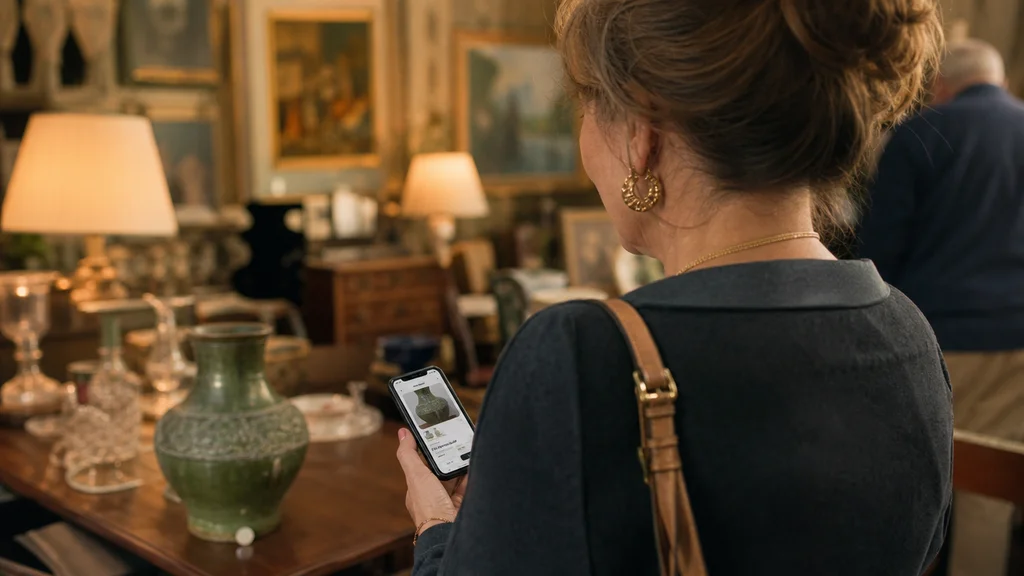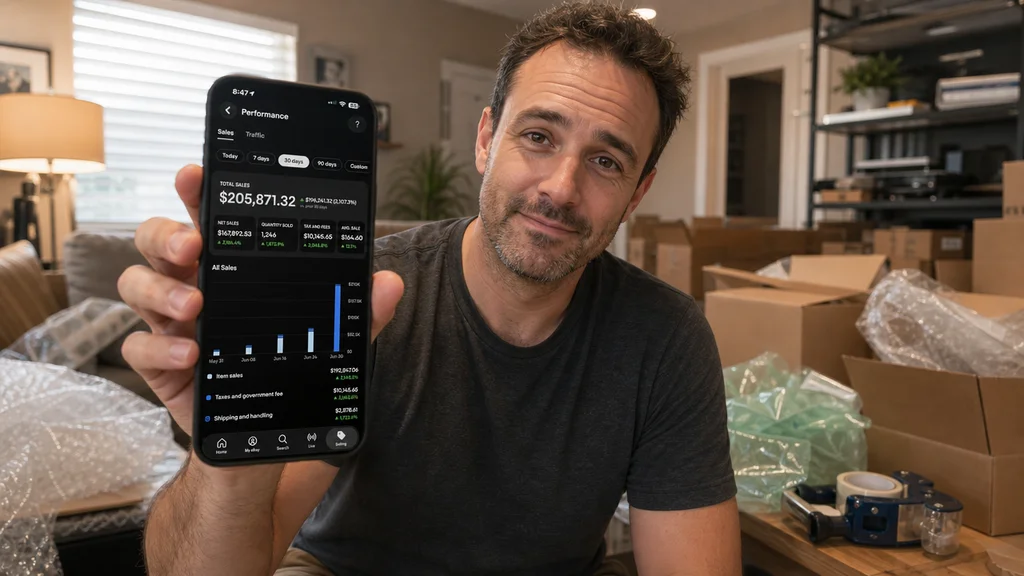


From flea market vase to $2,840 Han Dynasty jar: why valuable items get missed every day.
Stories like this feel like treasure hunts. But they're not really about luck — they're about knowing what to look for, and how to verify it before you buy.
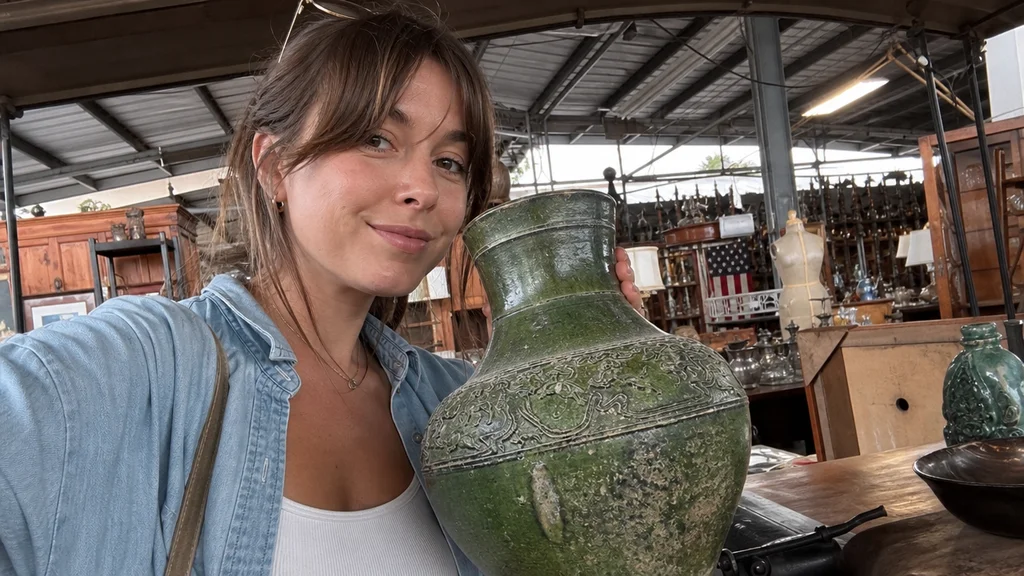
It looked like just another vase.
Sitting quietly on a table between old picture frames, dusty books, and mismatched kitchenware, there was nothing about it that screamed “valuable.” No spotlight. No display case. No auctioneer. Just a ceramic vessel sitting among hundreds of other secondhand items.
Most shoppers walked right past it.
One person didn't.
That decision turned an ordinary flea market purchase into a remarkable discovery: a Han Dynasty-style jar that ultimately sold for $2,840.
Stories like this capture our imagination because they feel like treasure hunts. They reinforce the idea that hidden fortunes are waiting to be discovered in thrift stores, estate sales, flea markets, garage sales, and antique malls across the country.
But these stories aren't really about luck.
They're about information.
Why valuable items get overlooked
Every day, valuable items are donated, sold, or discarded because their owners don't know what they have. Sometimes it's inherited property. Sometimes it's something purchased decades ago. Sometimes it's an item that has sat on a shelf for years without a second thought.
The challenge is that valuable items rarely look valuable to the average person. A Han Dynasty jar doesn't arrive with a tag saying “Ancient pottery worth thousands.” A rare collectible doesn't announce itself. A valuable piece of art doesn't glow.
Instead, value is often hidden inside details:
- A maker's mark
- A signature
- A production date
- A unique design characteristic
- A rare manufacturing variation
- A specific region of origin
To someone unfamiliar with the category, these details are invisible.
The real difference between experts and everyone else
Many people assume experts simply know everything. The reality is different. Experts know what to look for. They recognize clues. They know which details matter. And perhaps most importantly, they know how to verify their assumptions.
The flea market shopper who discovered the Han Dynasty jar didn't magically know its value. They recognized enough potential to investigate further.
"The biggest opportunities often begin with curiosity, not certainty."
Fair Market Value is what matters
When people hear stories about valuable finds, they often focus on the purchase price. “What did they pay for it?” But that's only half the story. The more important question is: “What was it actually worth?”
This is where Fair Market Value becomes important. Fair Market Value (FMV) is the price a willing buyer would reasonably pay a willing seller in today's market. It is based on:
- Recent sales
- Market demand
- Condition
- Rarity
- Comparable items
- Current buyer interest
Without understanding FMV, it's impossible to know whether you've discovered an opportunity. The Han Dynasty jar wasn't valuable because someone thought it looked valuable. It was valuable because buyers in the market were willing to pay thousands of dollars for it.
The problem with guessing
Imagine standing in a flea market holding an unfamiliar vase. You have two choices.
The first option is guessing. Maybe it's worth $20. Maybe it's worth $200. Maybe it's worth thousands. Without information, every estimate is just a guess.
The second option is research. Identify the item. Investigate the maker. Review comparable sales. Understand the market. Determine fair market value.
The more information you gather, the smaller the gap between what you think something is worth and what the market believes it's worth. That's where profitable decisions come from.
Hidden value is everywhere
Most people imagine valuable discoveries are rare. In reality, hidden value exists everywhere. Not every find becomes a $2,840 antique jar. But opportunities appear every day in categories such as:
- Pottery
- Glassware
- Furniture
- Watches
- Vintage electronics
- Artwork
- Collectibles
- Jewelry
- Sports memorabilia
- Luxury goods
The challenge isn't finding categories that contain value. The challenge is identifying which specific items within those categories are worth attention. That's why successful resellers spend less time guessing and more time researching.
Technology is changing the game
For years, uncovering hidden value required extensive experience. You needed books. You needed expertise. You needed relationships with collectors and dealers.
Today, technology is helping bridge that gap. Modern tools can help identify items, analyze comparable sales, estimate fair market value, and surface information that previously required hours of research. Instead of relying entirely on memory or intuition, buyers can make decisions using actual market data.
This doesn't replace expertise. It accelerates it.
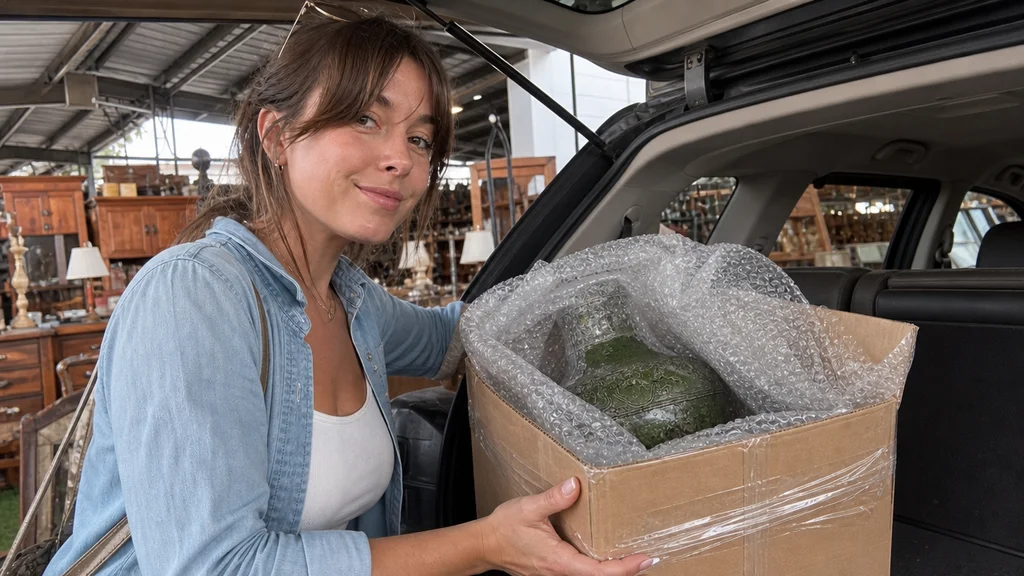
What happened next: an interview with Sarah
As I spoke with Sarah later, she admitted that the vase itself wasn't what changed her life. It was what happened next.
"I still remember sitting in my kitchen after I bought it. The flea market was over, I had the vase sitting on the table, and I kept looking at it and looking at my phone. Part of me was excited. Part of me thought I was probably crazy."
She laughed. “At that point I'd only been using Value Scout for a short time. I wasn't an expert. I wasn't a full-time reseller. I was just someone who loved flea markets and old things.”
Over the next few days, Sarah researched the piece further, reviewed comparable sales, and eventually listed it online. Then she waited.
“I honestly would've been thrilled if I made a couple hundred dollars,” she said. “I remember thinking if I could turn eighteen dollars into two hundred, that would be amazing.”
The sale ended up being far more significant than she expected.
"When it sold, I was shocked. I probably checked the notification five times because I thought there had to be some mistake."
But the money wasn't the most important part. What she did with the money was.
“I didn't go shopping. I didn't celebrate. I didn't spend it on myself.” Instead, she reinvested every dollar.
"That was the moment everything clicked for me. For the first time, I realized I wasn't just buying things anymore. I was buying inventory."
The proceeds from the vase funded her next sourcing trip. Then another. Then another.
Within a few months, she was walking through estate sales, flea markets, antique malls, and thrift stores with an entirely different mindset. Before, she was hoping to find something valuable. Now, she was actively looking for opportunities the market had overlooked.
“The crazy part is that the flea markets didn't change,” she told me. “The estate sales didn't change. The inventory didn't change.” What changed was her ability to understand fair market value.
"I think people imagine successful resellers have some secret source or special knowledge. They don't. They're just making decisions with better information."
She paused before adding something that stuck with me. “That vase wasn't the most valuable thing I found that year.”
It wasn't?
"No. The most valuable thing I found was realizing how many opportunities I had been walking past for years."
Today, the profits from those early flips have been reinvested into thousands of dollars of inventory. What started as a single flea market purchase evolved into a growing resale business built around one simple principle: know what something is actually worth before everyone else does.
And according to Sarah, that's exactly what Value Scout gave her. Not luck. Not guarantees. Just information. And in the resale business, information is often the most valuable asset of all.
The lesson from the Han Dynasty jar
The most important lesson isn't that someone made thousands of dollars. The lesson is that hundreds of other people likely walked past the same item. They saw the same jar. They had the same opportunity. What they lacked wasn't access. It was information.
The difference between a missed opportunity and a great find is often much smaller than people think. Sometimes it's a maker's mark. Sometimes it's a signature. Sometimes it's a quick search. Sometimes it's understanding Fair Market Value.
And sometimes, it's realizing that the ordinary-looking vase sitting on a folding table might be far more extraordinary than anyone realizes.
"Valuable items don't become valuable when someone buys them. They were valuable all along. The real challenge is recognizing it before everyone else does."