


Fair Market Value is where the money is made.
Ask a new reseller how they make money and you'll hear 'buy low, sell high.' That's true — but it's incomplete. The real money is made when you correctly understand Fair Market Value.
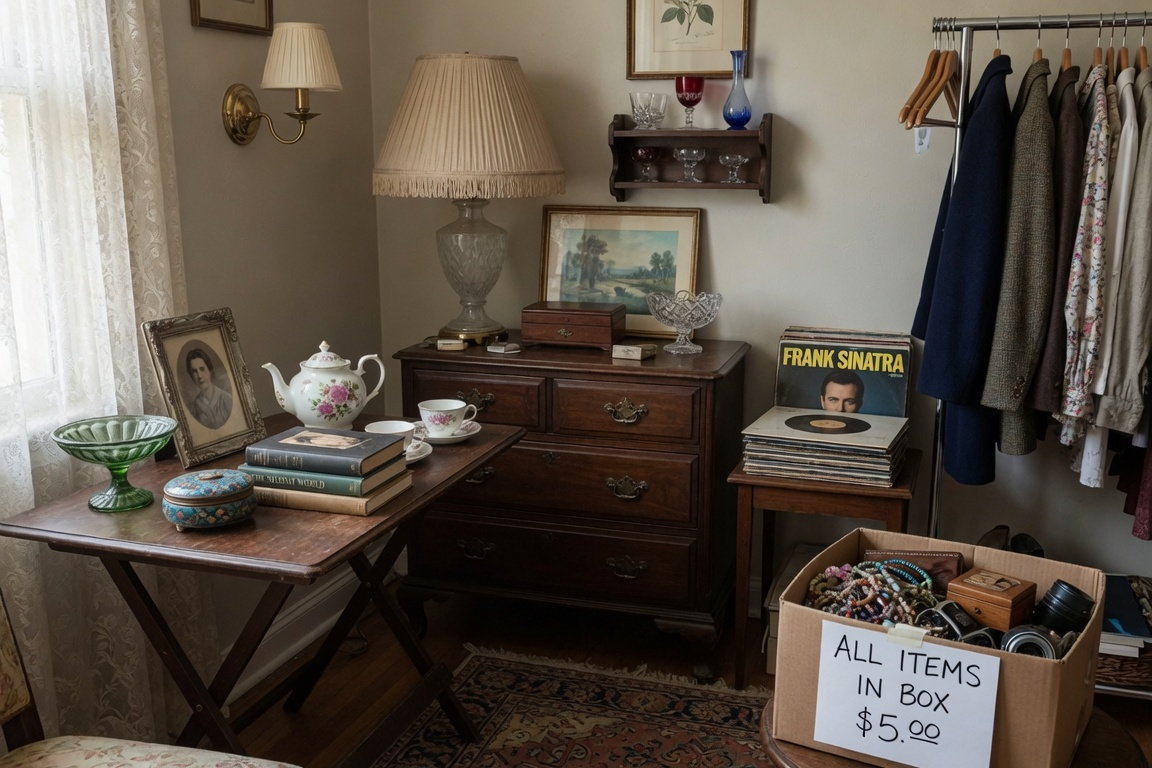
Ask a new reseller how they make money and you'll usually hear the same answer: 'Buy low and sell high.' Technically, that's true. But it's incomplete. The real money isn't made when you buy. And it isn't made when you sell. It's made when you correctly understand Fair Market Value.
Most people spend their time looking for valuable items. The best resellers spend their time looking for mispriced items. Those are two completely different things.
The vase that changed everything
Imagine you're standing in an estate sale and spot a beautiful blue-and-white vase priced at $50. You have three possible scenarios.
- Scenario 1 — The vase is worth $50. You buy it. You sell it for $50. You make nothing.
- Scenario 2 — The vase is worth $35. You buy it. You sell it for $35. You lose money.
- Scenario 3 — The vase is worth $500. You buy it. You sell it for $500. You make a great profit.
Notice something important. The vase itself didn't make you money. The difference between the asking price and the Fair Market Value made you money. The money was already there. You simply recognized it.
Most people focus on the wrong number
One of the biggest mistakes people make is focusing on asking prices. They search online and see a vase listed for $800, a watch listed for $2,500, a chair listed for $1,200 — and immediately assume that's what the item is worth.
But asking prices don't create profits. Sold prices do. Anyone can ask anything. A seller can list a chair for $5,000. That doesn't mean anyone will buy it. Fair Market Value comes from actual transactions. It comes from what buyers are willing to pay today — not what sellers hope to receive.
Why Fair Market Value matters
Fair Market Value is the realistic price a willing buyer would pay a willing seller under normal market conditions. Not the dream price. Not the auction record. Not the highest listing online. The realistic price. That's the number professional buyers care about, because that's the number that determines profit.
Two buyers see a chair priced at $100. Buyer A thinks, 'That seems reasonable.' Buyer B knows, 'The FMV is around $700.' Who makes money? The buyer with information. Not the one with better instincts. Not the one with more confidence. The one with better market data.
Every great flip starts with FMV
Every successful reseller is really doing the same thing. They're comparing two numbers: purchase price vs. Fair Market Value. That's it. That's the entire business. The larger the gap between those numbers, the larger the opportunity.
- A $20 item worth $200
- A $100 item worth $600
- A $300 item worth $1,200
The opportunity isn't the item. The opportunity is the gap. Without understanding FMV, that gap remains invisible.
Why most people miss great opportunities
Walk through any estate sale and you'll see dozens of people pass valuable items. Not because they aren't paying attention — because they don't know what they're looking at. A vase is just a vase. A lamp is just a lamp. A chair is just a chair. Until it isn't.
Sometimes a tiny detail changes everything. A maker's mark. A model number. A signature. A production year. A specific material. The difference between a $50 item and a $500 item is often hidden in details most people never notice.
The problem with guessing
Many buyers rely on intuition. They look at an item and think, 'It feels valuable.' The problem is that feelings don't scale. You can't become an expert in furniture, watches, pottery, glassware, electronics, collectibles, art, tools, and vintage toys all at the same time. The market is simply too large.
Even experienced resellers get things wrong. The winners aren't the people who know everything. They're the people who can quickly discover the information they need.
Why sold comps matter
The fastest way to understand Fair Market Value is through recently sold comparable items — often called 'sold comps.' Sold comps answer the critical questions:
- What are buyers paying?
- How often are similar items selling?
- Is demand growing?
- Is supply limited?
- What is the realistic selling range?
This is where confidence comes from. Not from guessing. Not from optimism. From evidence.
How Value Scout helps
Value Scout was built around a simple belief: the person with the best market information makes the best decisions. Instead of spending fifteen minutes researching every item, Value Scout helps identify what you're looking at and estimate its Fair Market Value using comparable sales and market data.
The goal isn't simply to tell you what an item is. The goal is to help you understand whether there's an opportunity. When you scan an item, you're trying to answer one question: is there a gap between the asking price and the actual market value? That's where profits live. That's where great flips are found. And that's where informed buyers consistently outperform everyone else.
The real secret of reselling
People love stories about finding treasure. The $5 garage sale item worth $500. The vase worth thousands. The forgotten collectible hidden on a shelf. But those stories miss the most important lesson.
"The money wasn't made because someone got lucky. The money was made because someone recognized Fair Market Value when everyone else couldn't."
That's the entire game. Not luck. Not intuition. Not treasure hunting. Information. The more accurately and quickly you can identify Fair Market Value, the more opportunities you'll uncover. Because in the world of buying and selling, Fair Market Value isn't just another number. It's where the money is made.